Heart Rate Variability: A Window into the Hidden Physiology of Tinnitus: ANNOUNCEMENT!
By Dr. Ryan Hill, Audiologist & Founder of Rellax Tinnitus

When Tinnitus is more than a sound
Every audiologist has heard it:
“The tinnitus is driving me crazy — I can’t sleep, and it makes me feel on edge all the time.”
We know tinnitus is more than an ear problem. But research now shows just how deeply it reaches into the body — all the way to the autonomic nervous system (ANS) that controls our stress and relaxation responses.
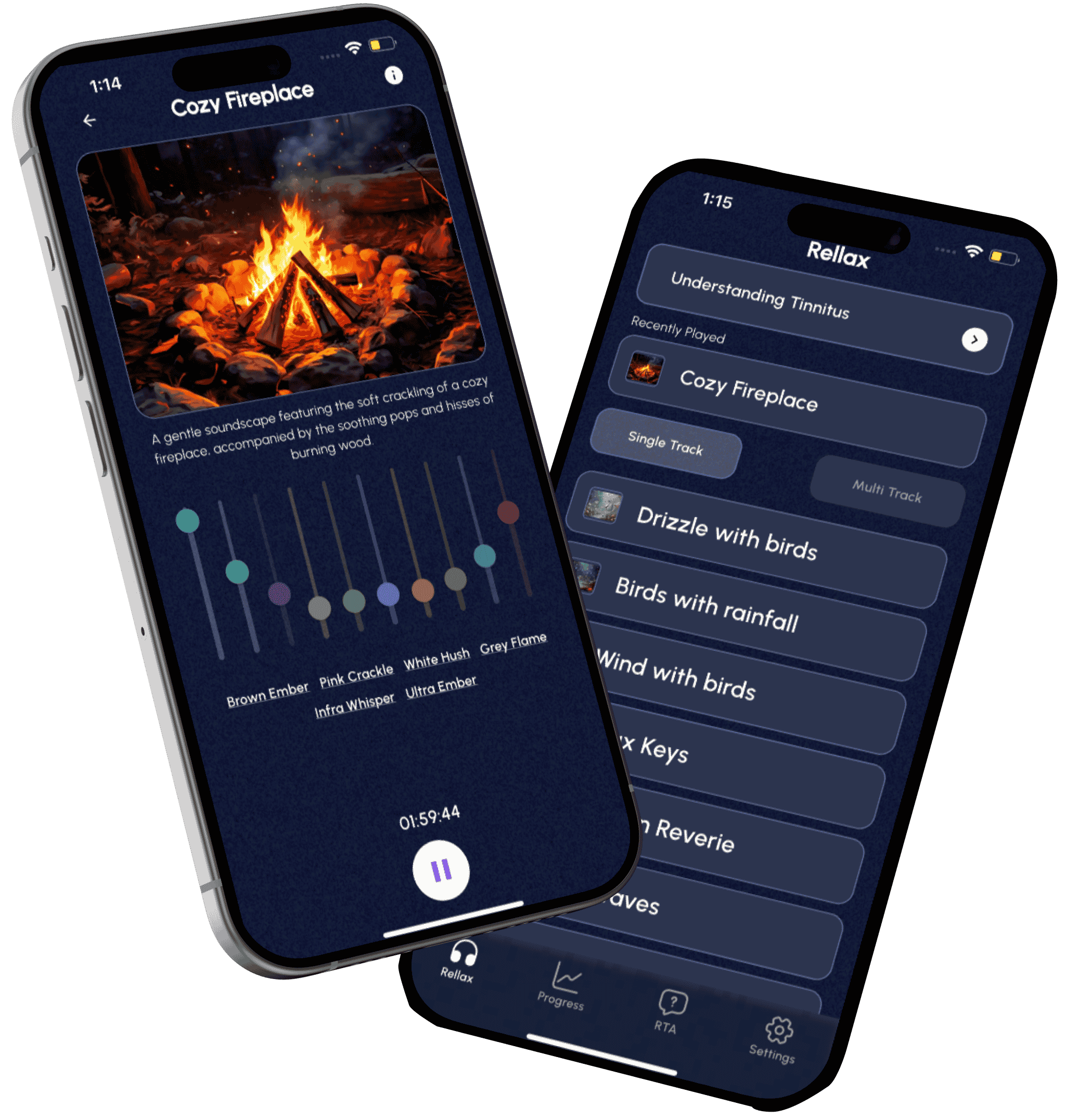
And the key to measuring that connection lies in a powerful physiological marker: Heart Rate Variability (HRV). A new feature coming soon to Rellax!!!!

What HRV tells us
HRV measures the time variation between heartbeats — a sign of the flexibility of the nervous system to adapt to stress and recover.
- Higher HRV reflects a balanced nervous system, good vagal tone, and strong resilience.
- Lower HRV means the sympathetic (“fight-or-flight”) branch is dominating, and the parasympathetic (“rest-and-digest”) branch is suppressed.
In simple terms: HRV tells us whether the body is in balance or under strain.
What the research shows about tinnitus and HRV
Over the last decade, studies have uncovered a consistent pattern — people with tinnitus often have lower HRV.
- Park et al., 2019: Compared 40 tinnitus patients to 40 healthy controls. The tinnitus group had significantly lower total HRV power and higher LF/HF ratio, indicating sympathetic dominance and vagal withdrawal.
- Apple Hearing Study (2024): Analyzed 72,229 participants using Apple Watches. Individuals who reported louder, longer, or more intrusive tinnitus had lower HRV even after controlling for age, sex, and BMI.
- Starkey Technical Report: After 8 weeks of sound therapy and masking, participants not only reported reduced tinnitus handicap but also showed improved HRV — a measurable sign of nervous system recovery.
Together, these findings highlight a two-way relationship: tinnitus can stress the body, and autonomic imbalance can, in turn, make tinnitus more distressing.
Tinnitus as an autonomic disorder
Brain imaging studies show that the same regions involved in tinnitus distress — the anterior cingulate, insula, and amygdala — are also key regulators of autonomic tone.
That means tinnitus isn’t just “heard” in the auditory cortex — it’s felt through the body’s stress pathways.
The result? Sleepless nights, muscle tension, elevated heart rate, and decreased HRV.
When we focus only on the sound and ignore this physiological loop, we miss an opportunity to help patients heal more completely.
What this means for clinicians
If tinnitus affects the autonomic nervous system, then our care should aim to restore autonomic balance, not just auditory comfort.
That starts with awareness and measurement. HRV can serve as a valuable biomarker — helping clinicians track stress, recovery, and treatment impact over time.
1. Use Rellax to Measure HRV
Use validated wearable or ECG tools to monitor resting HRV in tinnitus patients and monitor through Rellax!
Compare pre/post-therapy or correlate with tinnitus handicap scores with easy data collection and views.
2. Rebalance through therapy
Combine Rellax sound therapy with relaxation, breathing, and mindfulness interventions that increase vagal tone.
Encourage consistent sleep, gentle exercise, and deep breathing — all known to raise HRV.
3. Empower through feedback
Show patients their HRV improving as their tinnitus distress decreases within the Rellax app on the patient dashboard!
It’s motivating, objective, and reinforces the brain-body connection.
A new framing: Tinnitus as autonomic rehabilitation
Imagine if we reframed tinnitus management not as “masking a sound,” but as restoring nervous system resilience.
By tracking HRV, we can quantify progress that patients can feel — even before they can always hear the difference.
Their bodies are learning to relax again, and their tinnitus follows.

The takeaway
- Tinnitus often corresponds with lower HRV, reflecting autonomic stress.
- HRV can improve with effective tinnitus therapy through Rellax!
- Measuring HRV gives clinicians a window into patient recovery and empowers patients to see tangible progress.
The next era of tinnitus care is objective, holistic, and measurable — and HRV is the bridge that connects ear, brain, and body.
📱 About the author
Dr. Ryan Hill is an audiologist, author, and developer of Rellax Tinnitus, an evidence-based app that helps patients reduce tinnitus distress and rebalance their nervous systems through guided sound therapy coupled with your care.
Learn more at https://rellax.co/providers
Have any question?
Do not hesitate to contact us. We’re a team of experts ready to talk to you.