
Why Masking for Tinnitus Doesn’t Work — and How Rellax Can Help Retrain the Brain
Tinnitus, the persistent perception of ringing, buzzing, or hissing sounds in the ears, affects millions of individuals worldwide. For many years, one of the most common approaches to managing tinnitus has been sound masking — the use of external noise, such as white noise or nature sounds, to cover up the tinnitus signal.
While masking can offer temporary relief, it does not address the underlying cause of tinnitus perception. In fact, reliance on masking may hinder long-term improvement. A more effective and evidence-based approach lies in tinnitus retraining therapy (TRT). Through Rellax, patients can engage in a structured program that combines auditory retraining, assessment, and physiological tracking to achieve meaningful and lasting relief.

The Limitations of Masking
Masking works by introducing external sounds that partially or completely cover the tinnitus. While this can make tinnitus less noticeable in the moment, the effect is temporary — as soon as the masking sound stops, the tinnitus returns, often at the same intensity.
This is because masking does not modify how the brain interprets or responds to the tinnitus signal. The auditory and limbic systems continue to categorize tinnitus as a significant or threatening sound, perpetuating cycles of focus, stress, and discomfort. Over time, dependence on masking may even reinforce this negative association, delaying the brain’s natural ability to habituate.
In essence, masking conceals the symptom but does not facilitate neural adaptation or long-term improvement.

The Science Behind Tinnitus Retraining Therapy (TRT)
Tinnitus Retraining Therapy (TRT) offers a fundamentally different approach. Rather than suppressing tinnitus, TRT focuses on retraining the brain to disregard it — much like how one can ignore the constant hum of a fan or distant traffic noise.
TRT combines controlled sound exposure with counseling and relaxation strategies to help the auditory system reclassify tinnitus as a neutral, non-threatening stimulus. As this reclassification occurs, the emotional and physiological response diminishes, allowing the tinnitus to fade naturally into the background of awareness.
Through consistent practice, patients often experience substantial reductions in both tinnitus perception and distress.
How Rellax Enhances Tinnitus Retraining
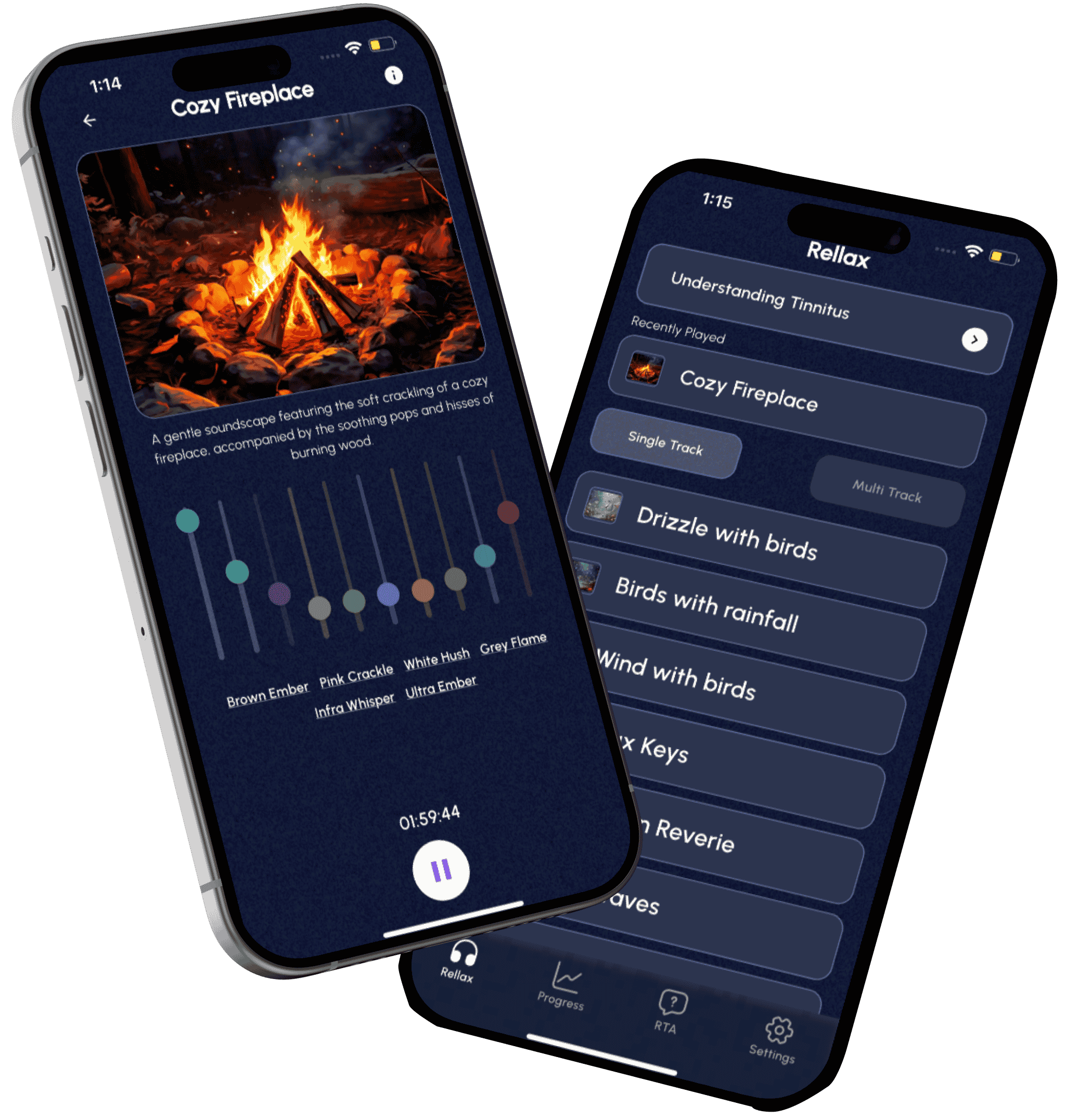
Rellax integrates the principles of TRT into an advanced, data-driven digital platform. It delivers personalized, measurable, and structured care that supports both clinicians and patients throughout the habituation process.
1. Guided Sessions for Habituation
Rellax provides a series of expert-designed sessions incorporating sound therapy, auditory desensitization, and mindfulness-based retraining. These sessions are tailored to promote progressive habituation, helping a patient reduce tinnitus perception through active neural conditioning — not passive masking.
2. Comprehensive Assessments
Because every tinnitus case is unique, Rellax begins with an in-depth assessment. The system evaluates each patient’s tinnitus profile enabling the patient and clinician to adapt therapy parameters accordingly. Ongoing assessments track progress over time, providing clinicians with actionable insights to refine treatment strategies.
3. HRV Tracking and Nervous System Regulation
Tinnitus distress is closely linked to autonomic nervous system imbalance. Heightened stress responses can amplify tinnitus perception, while improved physiological regulation can reduce symptom severity. Rellax incorporates heart rate variability (HRV) tracking to monitor and enhance autonomic balance. By monitoring HRV, patients and clinicians can have an objective measurement of distress improvement tracked over time.
Moving Beyond Masking — Toward Sustainable Relief
While masking can temporarily obscure tinnitus, it fails to promote the neural adaptation necessary for long-term relief. Sustainable improvement requires a therapeutic approach that retrains both the brain and the nervous system.
Rellax provides clinicians and patients with a comprehensive toolkit for this process — combining structured habituation sessions, personalized assessments, and HRV-based stress regulation to support genuine, lasting progress.
Masking hides tinnitus.
Rellax helps retrain the brain.
Have any question?
Do not hesitate to contact us. We’re a team of experts ready to talk to you.