How to Combine Sound Therapy, Sleep, and HRV Tracking for Better Tinnitus Care
Tinnitus rarely affects just hearing. For many patients, it also influences sleep, stress levels, and overall well-being. That is why sound therapy for tinnitus is often more effective when viewed as one part of a broader care strategy rather than a standalone solution.
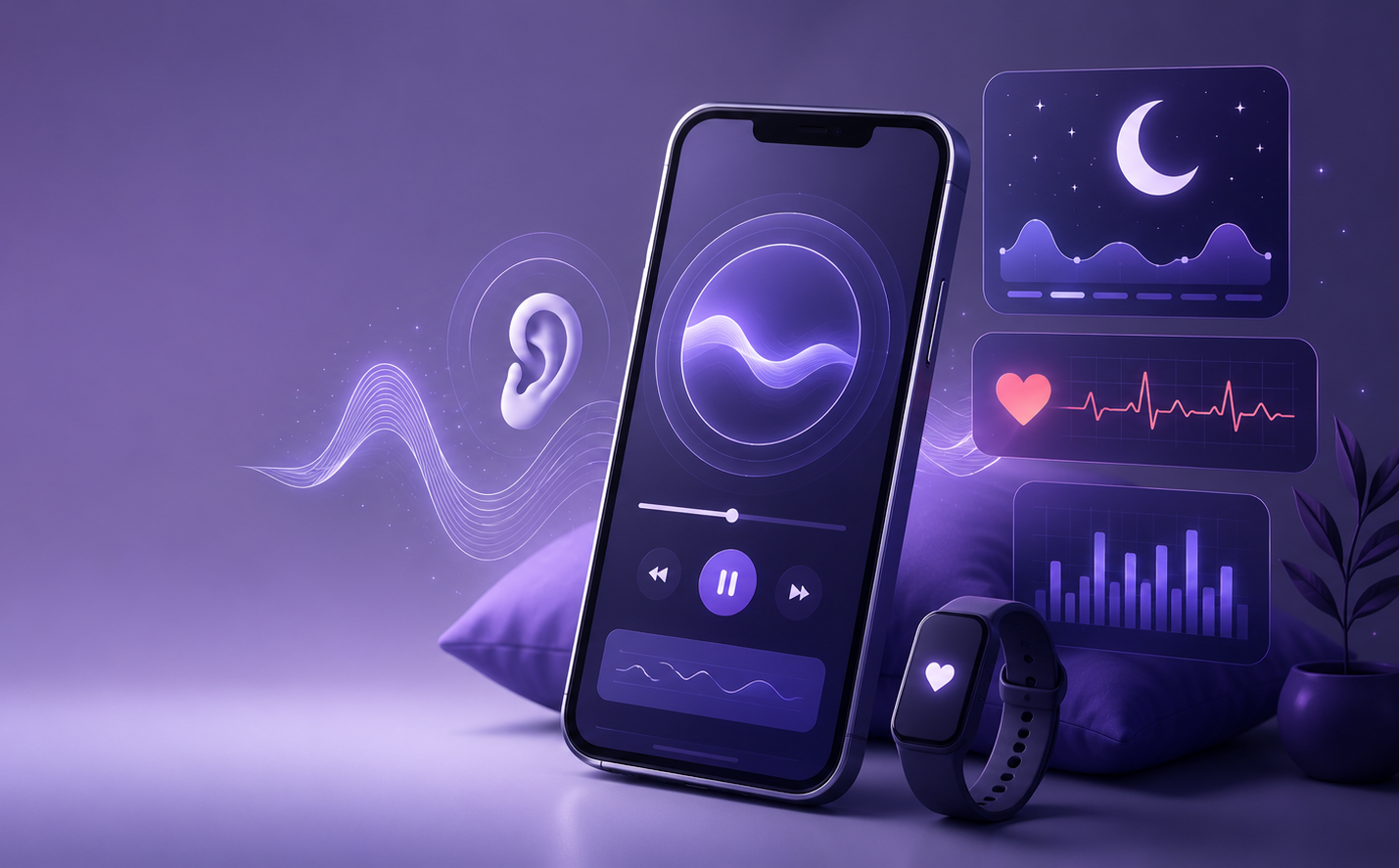
Instead of focusing on symptoms alone, providers can better understand a patient’s experience by looking at sleep quality and Heart Rate Variability (HRV) alongside sound therapy. Together, these insights help build a more personalized tinnitus treatment plan and support more informed clinical decisions.
Why Sleep Matters for Tinnitus
Sleep and tinnitus often influence one another. Patients who struggle with poor sleep may become more aware of their tinnitus, while persistent tinnitus can make it difficult to fall asleep or stay asleep. Research reflects this connection as well. A 2021 systematic review found that more than half (53.5%) of people with tinnitus experience sleep impairment, emphasizing the important role sleep plays in overall tinnitus management.
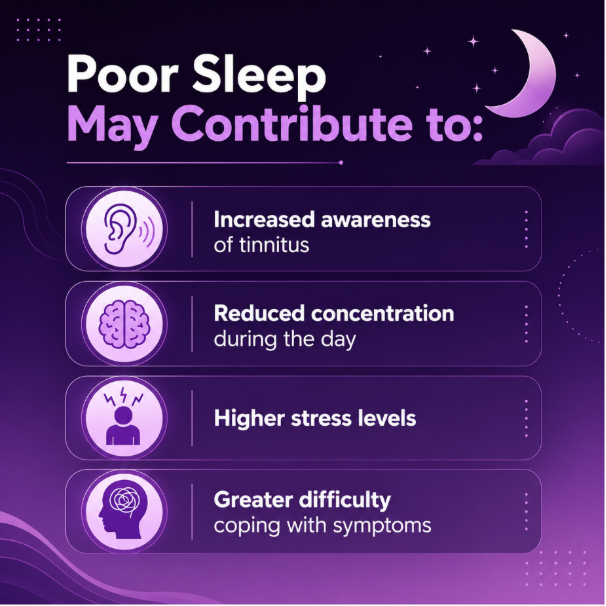
Monitoring sleep patterns also provides valuable context during follow-up appointments. Instead of relying only on patient recall, providers can better understand whether changes in sleep may be contributing to changes in tinnitus perception.
What HRV Tracking Can Reveal
While patients can describe how they feel, HRV tracking offers another perspective by measuring how the body responds to stress and recovery over time.
Heart Rate Variability, commonly known as HRV, measures the variation between heartbeats. Rather than focusing on heart rate alone, it reflects how the autonomic nervous system adapts to physical and emotional demands.
Although HRV is not a diagnostic tool for tinnitus, it can help providers recognize patterns that may otherwise go unnoticed. For example, periods of lower HRV may coincide with increased stress or poor recovery, both of which can influence how patients experience their symptoms.
By incorporating heart rate variability into patient monitoring, clinicians gain additional insight that complements clinical observations and patient feedback.
Where Sound Therapy Fits In
Among the available approaches for tinnitus treatment, sound therapy remains a widely used option for helping patients manage their symptoms.
Instead of masking tinnitus completely, sound therapy introduces carefully selected sounds that reduce the contrast between tinnitus and a quiet environment. Over time, this may help patients shift their attention away from the ringing and create a more comfortable listening experience.
Sound therapy can also support relaxation, particularly during quiet moments or before bedtime. Therefore, it naturally complements conversations around sleep and overall tinnitus care.
Because every patient experiences tinnitus differently, personalized sound options often play an important role in creating an effective treatment strategy.
Why Combining All Three Makes Sense
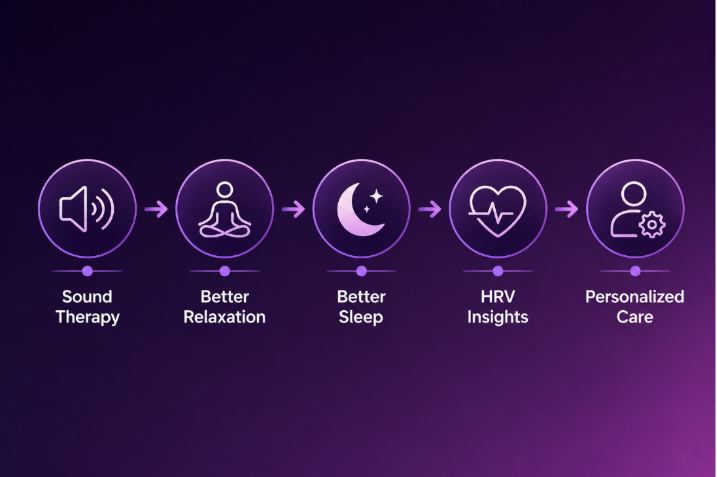
Each of these approaches contributes something different to patient care:
- Sound therapy: Helps reduce the perception of tinnitus.
- Sleep tracking: Reveals sleep quality and recovery patterns.
- HRV tracking: Provides insight into stress and nervous system activity.
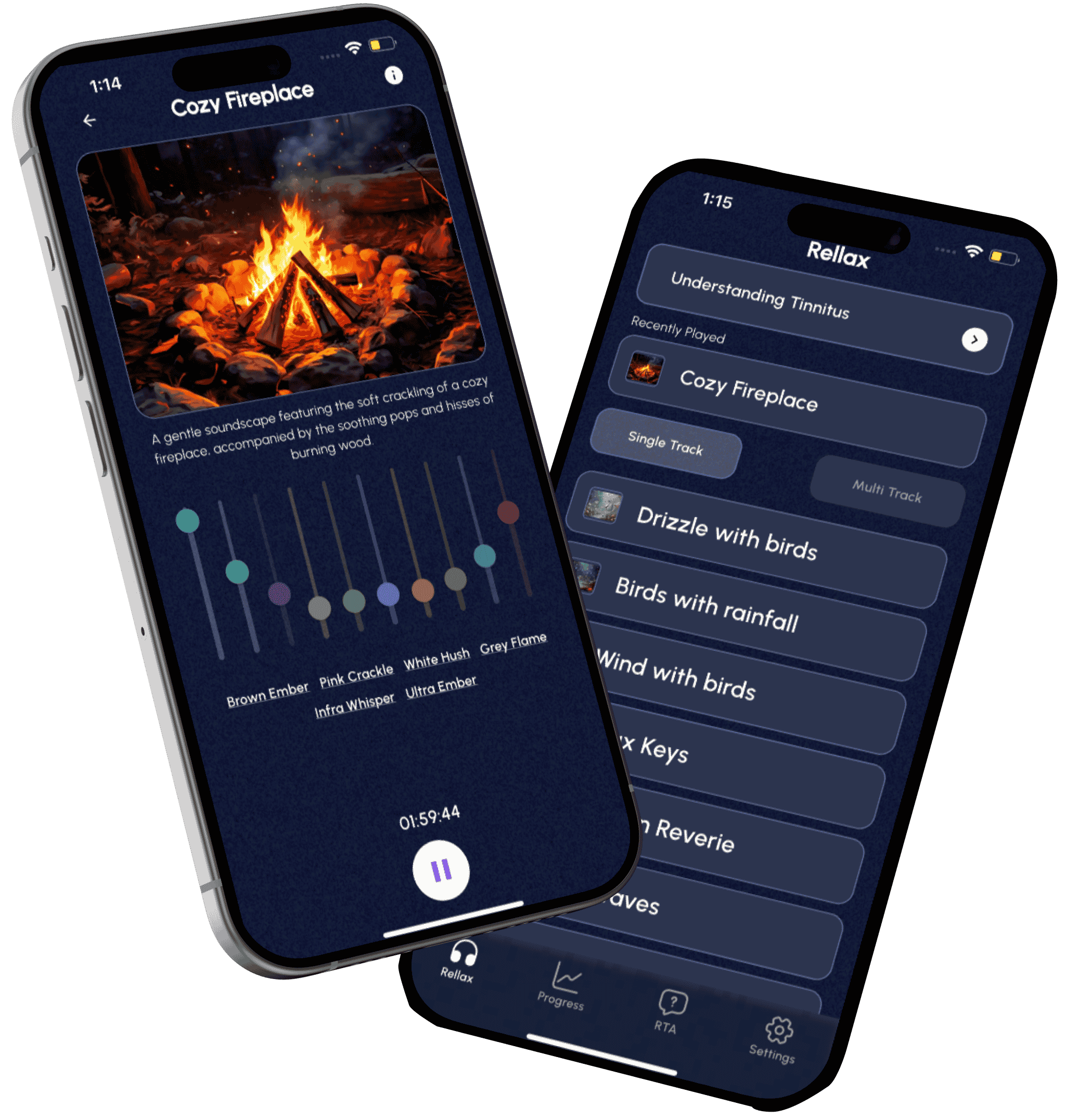
How Rellax Brings Everything Together
Managing multiple sources of patient information can quickly become challenging. Rellax simplifies this process by bringing essential insights into one platform.
With Rellax, providers can:
- Deliver personalized sound therapy for tinnitus
- Monitor sleep tracking trends
- Review HRV tracking alongside treatment progress
- View patient insights in one place
- Make more informed care decisions over time
Takeaway
Tinnitus is a complex condition, and every patient’s experience is different. Looking beyond hearing alone allows providers to better understand the factors that may influence symptom severity from one day to the next.
By combining sound therapy for tinnitus, sleep insights, and HRV tracking, clinicians can develop a more complete picture of patient progress. Rather than treating each factor in isolation, they can use these insights together to support more personalized and informed tinnitus care.
Discover how Rellax can support your tinnitus treatment approach.
Frequently Asked Questions (FAQs)
Yes. While sleep does not cause tinnitus, poor sleep can make symptoms feel more noticeable and affect how well patients cope with them.
HRV tracking provides insight into the body's stress and recovery patterns, giving providers additional context when evaluating changes in tinnitus symptoms.
Many patients use sound therapy as part of their bedtime routine because it can create a more comfortable listening environment during quiet periods.
Have any question?
Do not hesitate to contact us. We’re a team of experts ready to talk to you.